A Narrative of 85 Years Standing Beside the People’s Suffering
In the history of a city, there are names that shine — not with a heart bound to the clamor of gold and power, nor drowned in the tumult of politics, but in absolute silence and with utter humility, they have devoted and continue to devote their entire being to the people. It is for this reason that their names, even with the passage of years, transcend individual identity and become a symbolic identity, turning into a part of the collective memory and history of a city’s people. The name of Dr. Saeed Samadzadeh belongs to this very kind of names; a physician who did not confine the practice of medicine merely to treating illness, but crossed the boundaries of his profession to become influential and history-making in the realm of charitable and social services alongside his scientific identity.
On the seventeenth of June, 1941, a child opened his eyes to the world in Salmas — one whose name, decades later, would become intertwined with the development of medical education, organized philanthropy, and social responsibility. A distinguished urologist who was the founder of the Urmia Medical School and one of the three architects of the first Omid Charity Association; an institution that today, after 36 years of continuous activity, has become the largest charitable association and the most advanced cancer treatment center in the northwest of the country, where thousands of patients and their families spend a part of their life story under the shade of its hope.
Perhaps the secret to the enduring legacy of certain individuals lies in the fact that, rather than living for themselves, they leave an impact on others. Dr. Samadzadeh belongs to that generation of people who believed that development is not achieved merely by constructing buildings and acquiring equipment; rather, more than anything else, it requires building trust, empathy, and social participation. For this reason, his name can be seen alongside many of the province’s charitable, medical, and social institutions — institutions each narrating a part of his humanitarian concerns.
In our time, when society needs ethical and social role models more than ever, reviewing the lives of such figures is not merely a tribute to an individual; rather, it is a reminder of values that can illuminate the path ahead.
A Gathering of the Great Family of Philanthropy
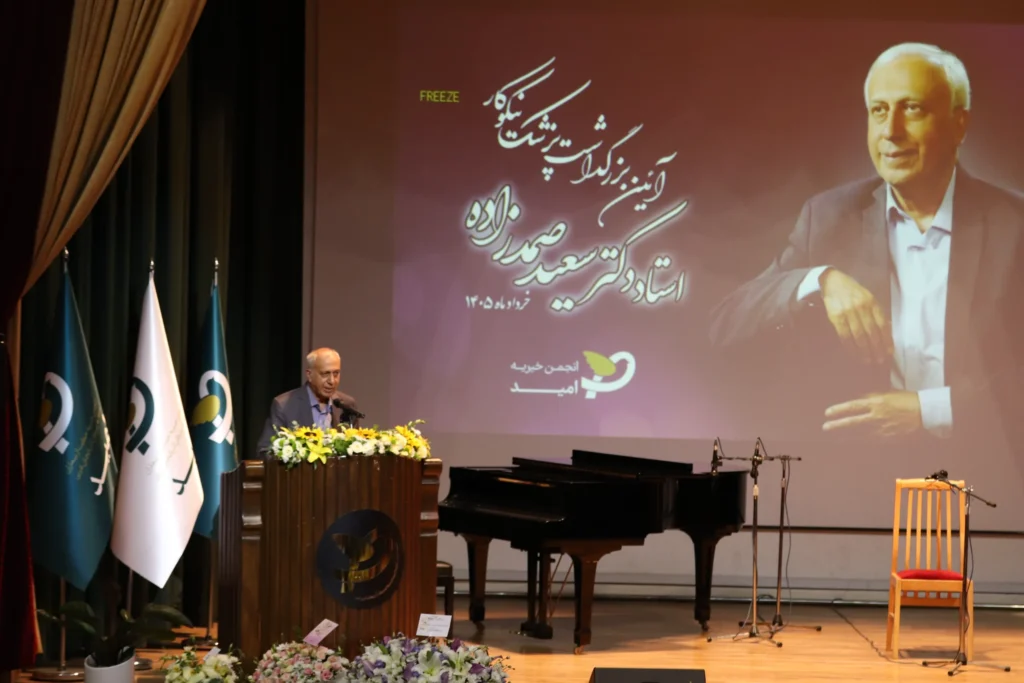
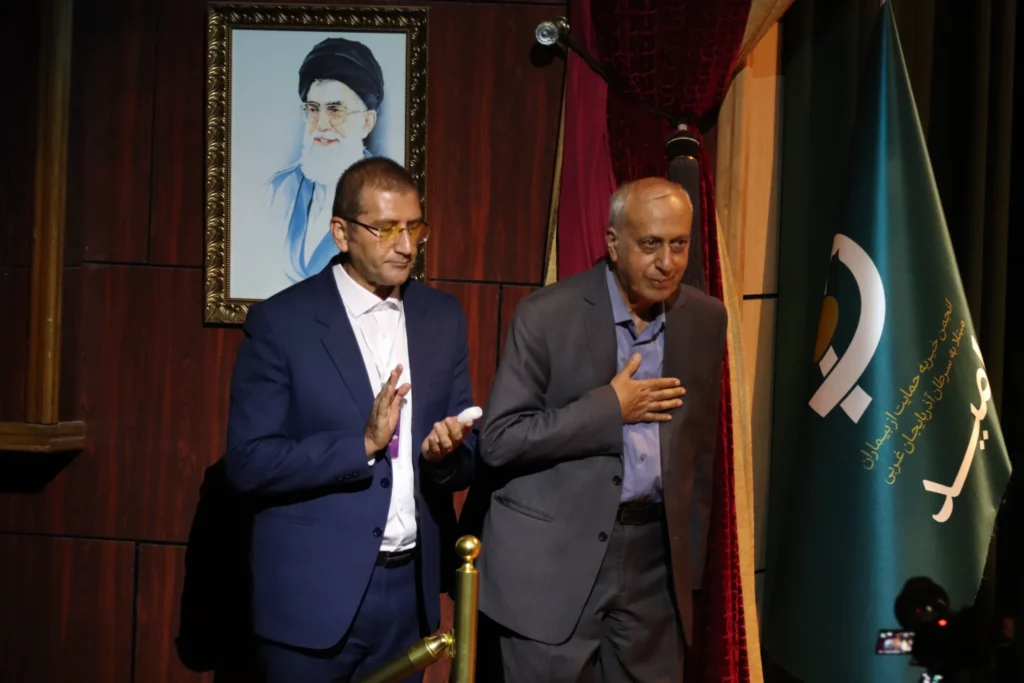
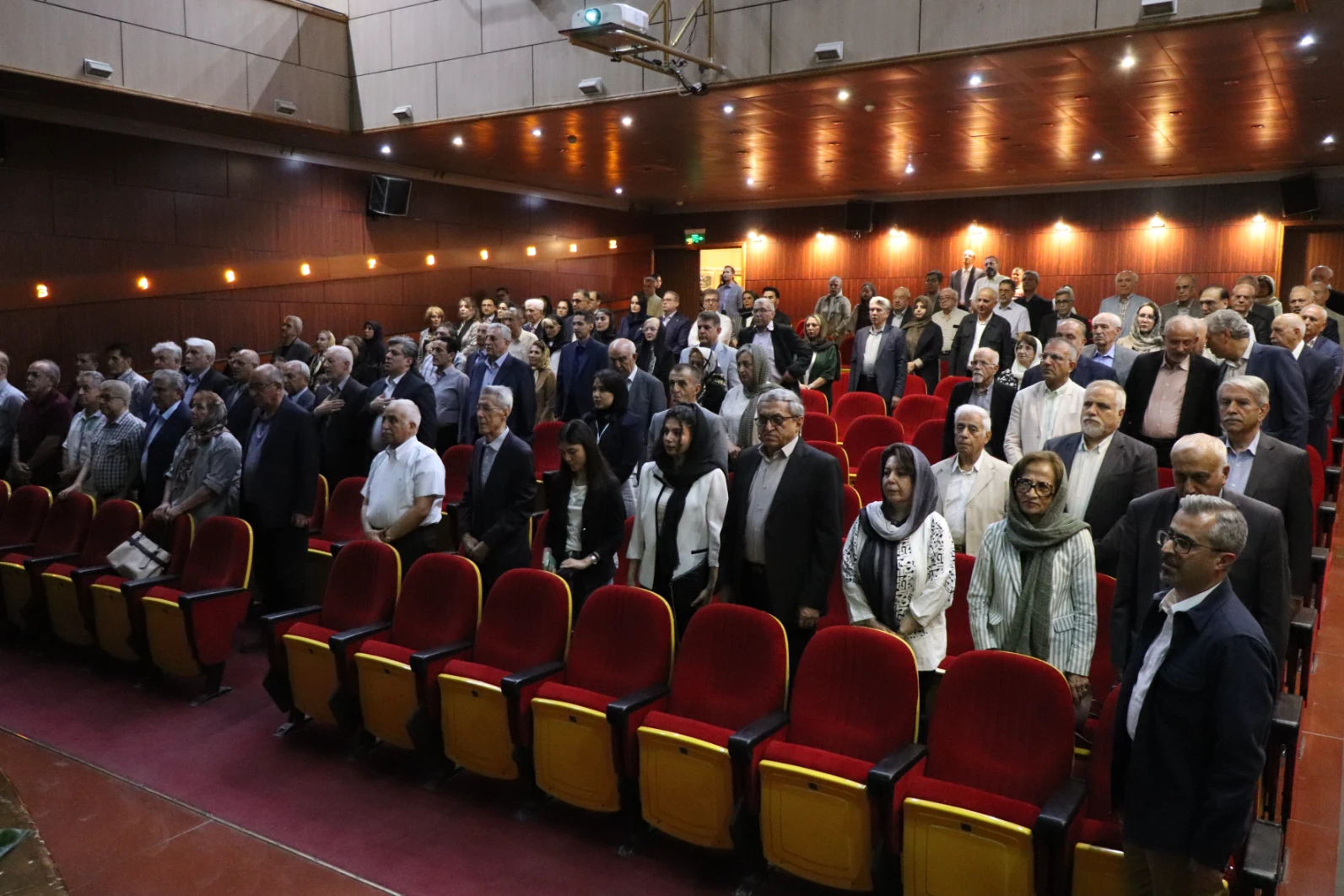
Accordingly, on the evening of Thursday, June 18, 2026, the conference hall of the Omid Charity Association hosted a ceremony that resembled, more than a mere commemoration, a gathering of the great family of philanthropy, health, and social responsibility of the province — a ceremony to honor a man who has dedicated a significant part of his life to the treatment, education, and service of the people.
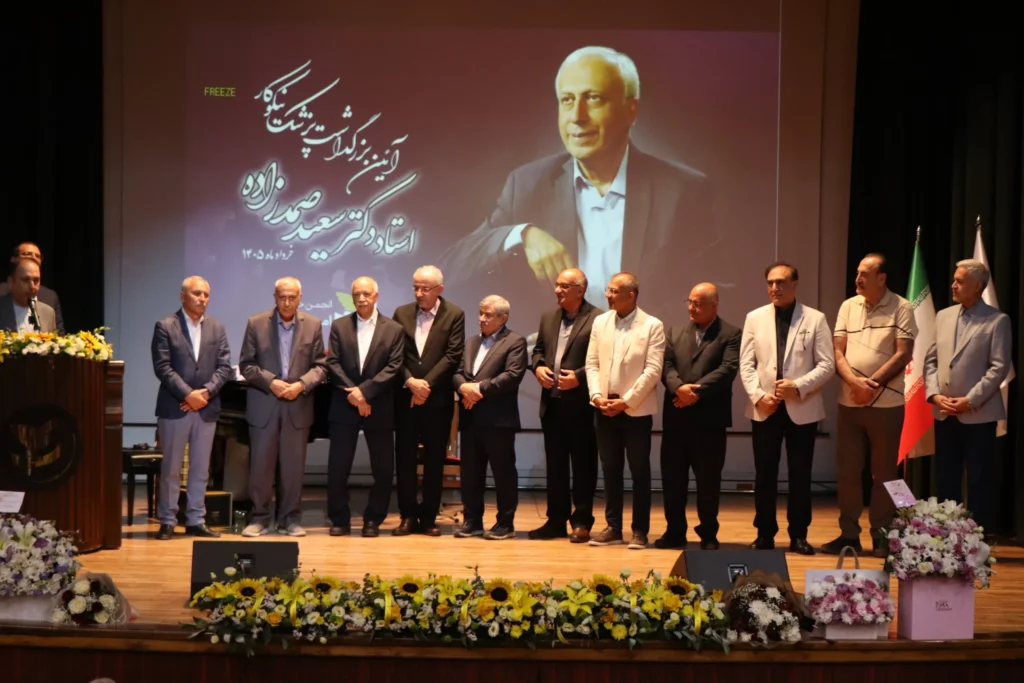
Present at this ceremony were members of the Board of Trustees and the Board of Directors of the Omid Charity Association; physicians and board members of Azerbaijan, Milad, Shams, and Sowlati Hospitals; members of the boards of trustees of charities that Dr. Samadzadeh has played a role in forming and guiding, including the Marefat Charity, the Child and Adolescent Welfare Foundation, and the Kidney Patient Support Association; as well as faculty members and urology department physicians of Urmia University of Medical Sciences, the medical staff of Omid Hospital, Omid volunteers and ambassadors, and of course, Salmas natives residing in Urmia.
From the very first moments, the atmosphere of the ceremony took on the color and scent of gratitude. Many of the invitees, on the occasion of Dr. Samadzadeh’s birthday, attended this ceremony bearing symbolic gifts and heartfelt mementos — gifts that, beyond their material value, carried a message of thanks and respect from the various generations who have, in some way, benefited from his scientific, medical, and social services.
The Necessity of Role Modeling in Civil Institutions
At the beginning of the ceremony, Dr. Khashabi, Chairman of the Board of Directors of the Omid Charity Association, spoke with a perspective extending beyond personal tribute, addressing the necessity of role modeling in civil and charitable institutions. He, who alongside Dr. Samadzadeh and the late Haj Mohsen Haj Salem is considered one of the three founding architects of Omid Charity, pointed to Dr. Samadzadeh’s prominent role in the formation and development of charitable and medical activities in the province, emphasizing that for the continuation of social development, society requires the introduction and commemoration of figures who have been able to combine science, ethics, and social responsibility.
His words were, in essence, an elucidation of the stature of a personality who played an influential role not only in the field of medicine but also in the domain of social institution-building, and who has become an inspiring role model for younger generations.
Following this, Dr. Khadijeh Makhdoumi took the podium, and in words brimming with respect and emotion, spoke of the difficulty of describing Dr. Samadzadeh’s character. Reviewing parts of the professional and social life of this veteran physician, she addressed his lasting role in the development of the province’s charitable and medical activities and regarded his services as a clear manifestation of “enduring good deeds” (Baqiyat al-Salihat) — services whose effects have persisted not over a short period, but in the lives of thousands of people.
In various parts of the ceremony, the memory of the late Dr. Mehri and the late Haj Mohsen Haj Salem was also honored — figures who, alongside Dr. Samadzadeh, have shaped a part of the history of the formation and growth of the province’s charitable and grassroots institutions. The remembrance of their names transformed the atmosphere of the ceremony into a narrative of the continuity of a shared path; a path founded upon empathy, trust, and service to the people.
The Story of a Passion on the Screen of Hope
One of the special and impactful segments of this ceremony was the unveiling and screening of the first documentary film on the life and work of Dr. Saeed Samadzadeh, titled “You Came for Infinity.” This film, produced as part of the documentary series “The Story of a Passion,” aims to introduce the influential benefactors of Omid. The film sought to present an image of Dr. Samadzadeh’s years of scientific, medical, and social endeavor before the audience — a narrative of a person for whom passion found its meaning not in fame or status, but in service and philanthropy.
Simultaneously with the various segments of the ceremony, a traditional Persian music performance lent a pleasant ambiance to the program and provided an opportunity for the attendees to reflect upon the years of service of one of the province’s enduring figures in an atmosphere infused with culture, art, and memory.
An Invitation Toward the Future; A Legacy in the Hearts of the People
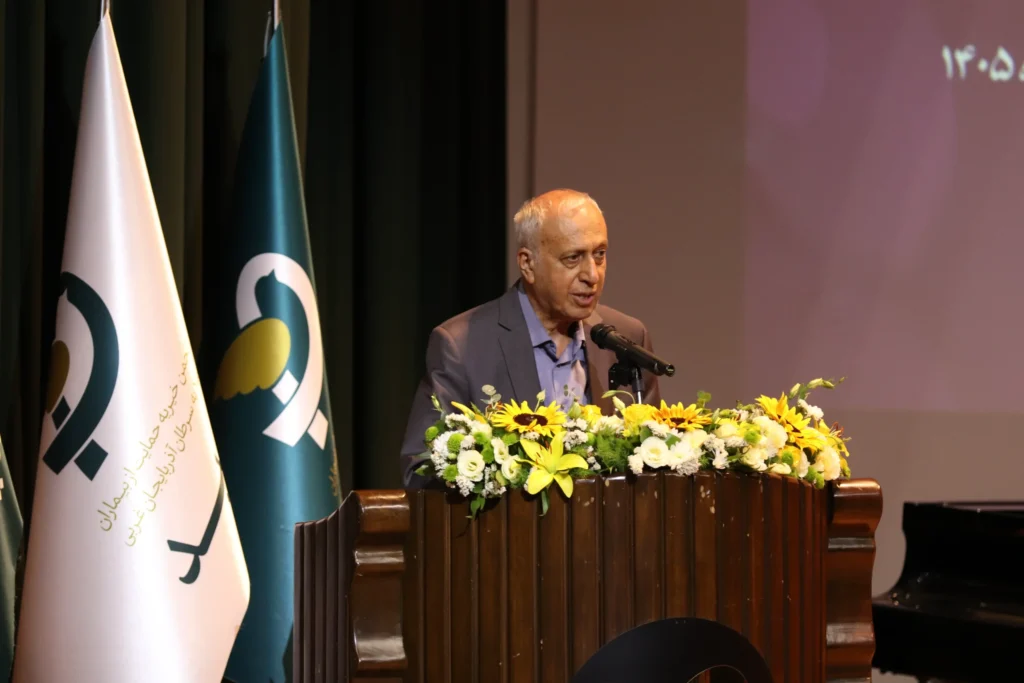
But perhaps the most moving moments of the ceremony came when Dr. Samadzadeh himself took the podium. With his characteristic simplicity and humility, he expressed gratitude for the affection of those present and dedicated his words not to recounting the past, but to an invitation for the future — an invitation to participate in charitable work, to accompany grassroots institutions, and to continue the path of social responsibility.
He emphasized that no society will progress without the presence of concerned and benevolent individuals, and he asked everyone to play their part in alleviating human suffering, in whatever position and capacity they may hold.
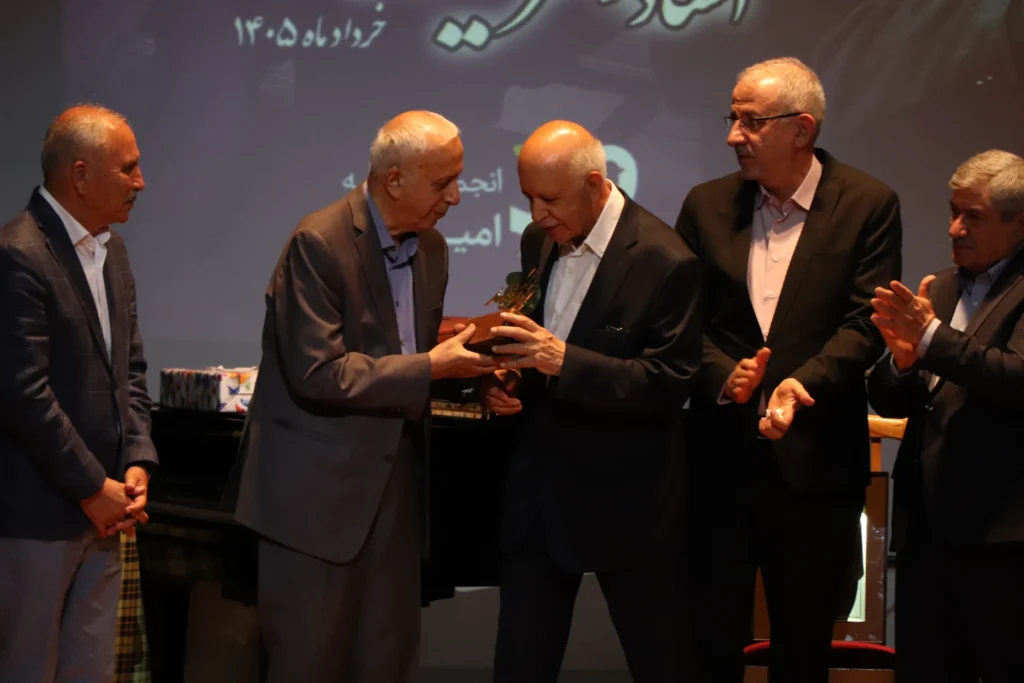
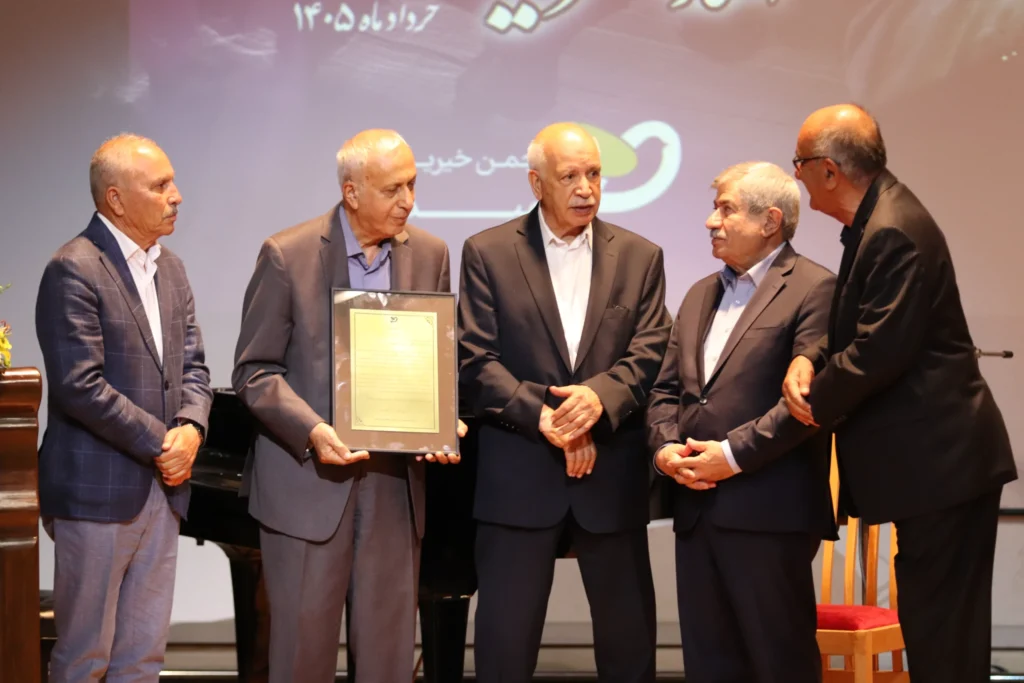
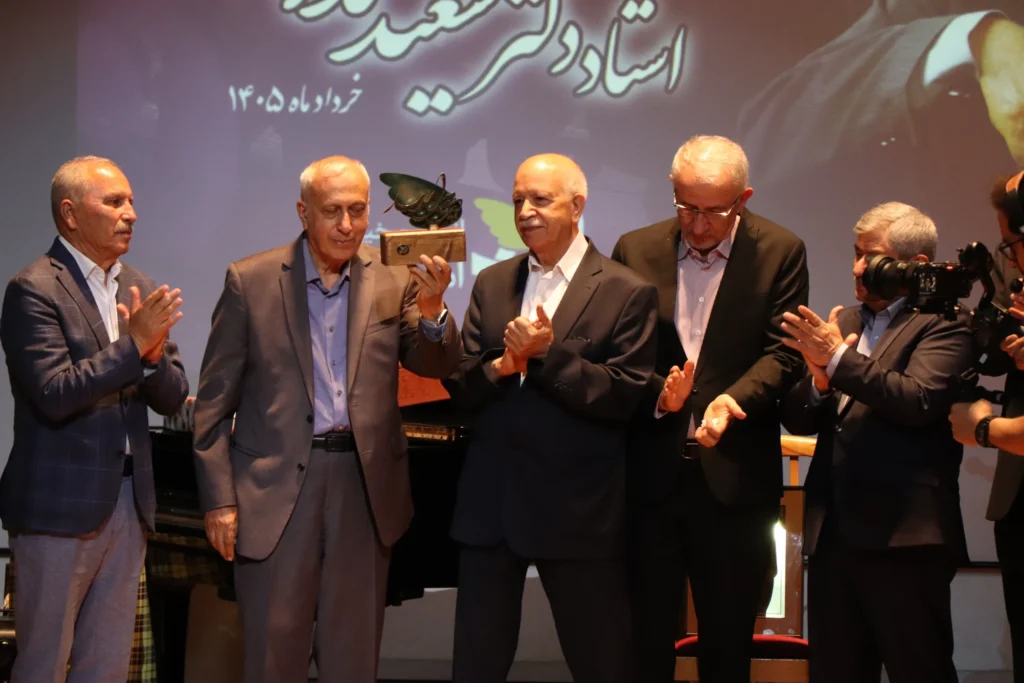
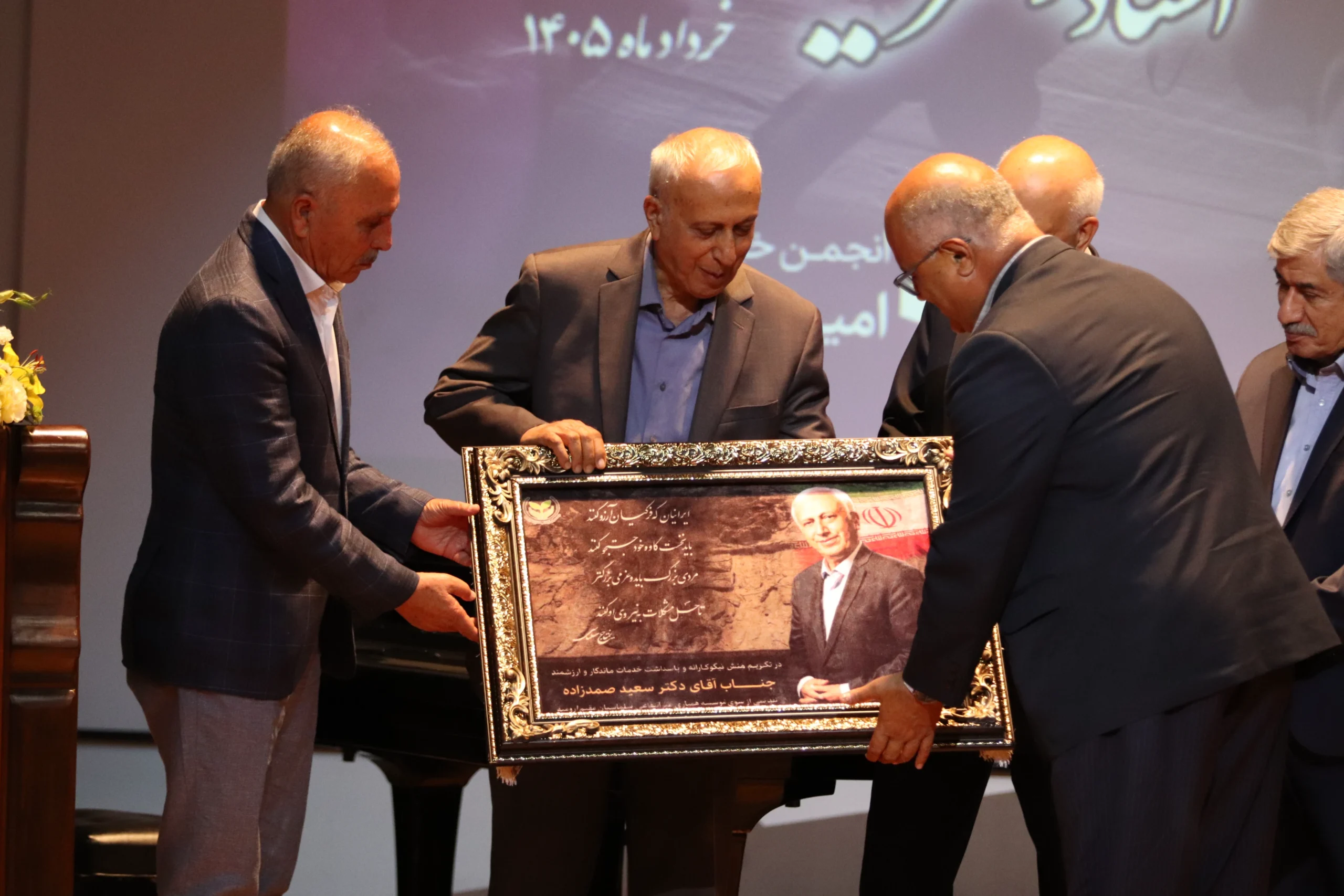
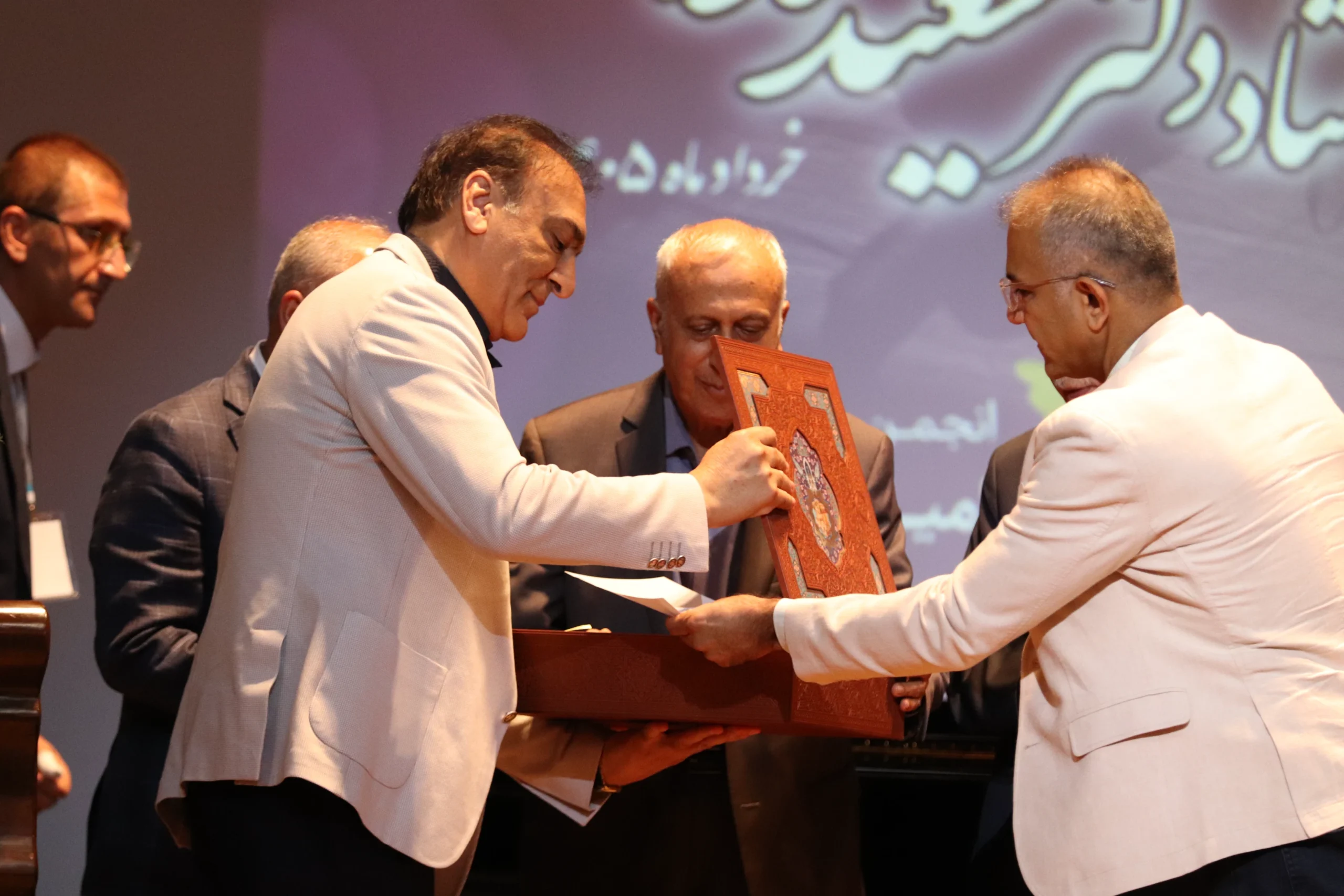
At the conclusion of this ceremony, the Grand Award of Philanthropy, the “Ray of Hope Statuette,” along with a plaque of appreciation, was presented to Dr. Saeed Samadzadeh in recognition of decades of scientific, medical, educational, and social endeavor — a manifestation of the respect expressed not just by one association, but by a great community that sees a vital part of its human and social capital embodied in him.
But what unfolded on that Thursday evening in the hall of the Omid Charity Association was not merely a commemorative ceremony; it was a kind of re-reading of the collective memory of a community that still knows how to appreciate its influential figures. A community that is grateful and, amidst the rush of daily life, pauses for a moment to rise in honor of a man who has spent a significant part of his life not in pursuit of accumulating name and title, but in striving to lessen the suffering of fellow human beings.
Perhaps the true value of such ceremonies lies precisely in this: that they remind younger generations development does not simply boil down to building hospitals, universities, and institutions. Development is, first and foremost, the product of the presence of individuals who create trust, take the hands of others, and build a lasting bridge between knowledge, ethics, and social responsibility. It teaches that wealth is not money; wealth is the love of the people — to love and to be loved. To leave a mark on the lives of God’s creation and to seek the satisfaction of both: the created and the Creator.
Dr. Saeed Samadzadeh is of this very lineage of human beings; a figure whose footprints can be sought not only in medical records and treatment centers, but in the smiles of patients, in the continuity of charitable institutions, and in the hope that has remained alight in the hearts of thousands of families over the decades.
Perhaps “The Story of a Passion” of Dr. Samadzadeh, which was imprinted on the screen that night, was not merely the title of a documentary series and a film; it was the account of a generation that believed the greatest success of a person is not what one builds for oneself, but what one leaves behind for others. A legacy that neither fades nor is forgotten with the passage of time; for it dwells in the hearts of the people.