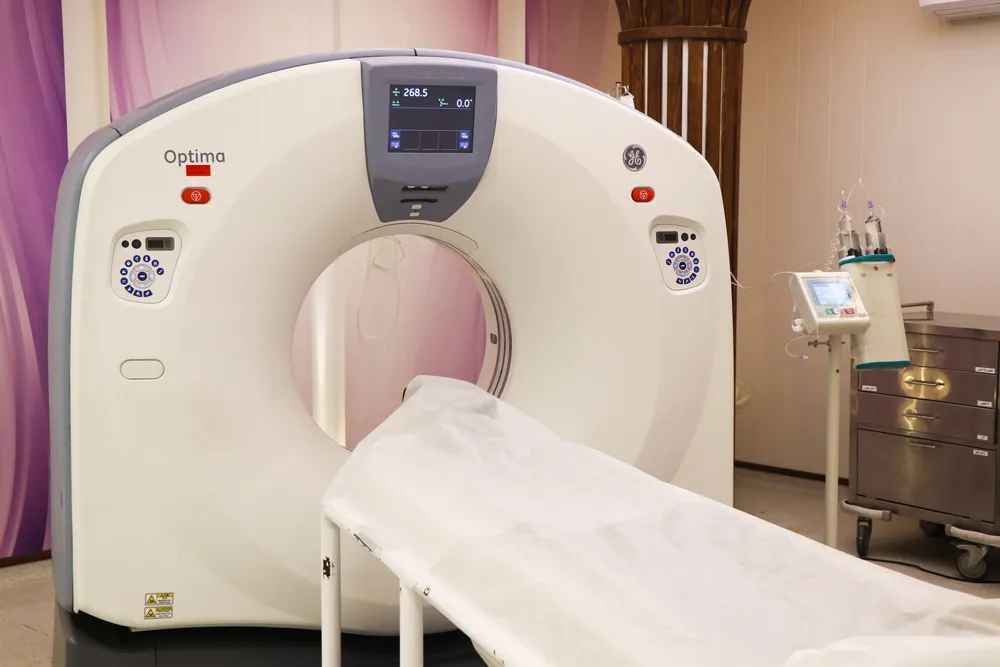
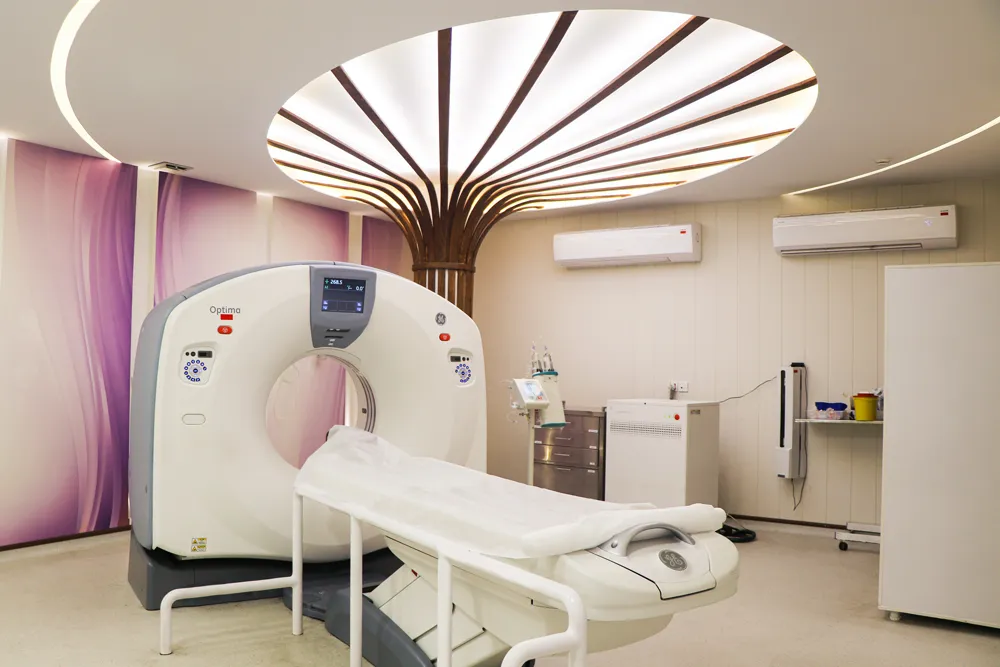
CT scan is the abbreviation for Computed Tomography Scan and is sometimes referred to as a CAT scan. A CT scan is an advanced medical imaging technique in which a series of images captured by very narrow X-ray beams from different angles of the body are processed by a computer to create cross-sectional images of the patient’s internal organs. Today, advances in science and technology have made it possible to use powerful and highly accurate CT scanners capable of producing images with slice thicknesses of less than one millimeter. These images can display detailed views of bones, blood vessels, and other soft tissues throughout the body, from the top of the head to the tips of the toes.
Applications of CT Scans in Medicine
- Detecting abnormalities such as tumors, injuries, fractures, and other conditions affecting the muscles and bones
- Diagnosing and monitoring conditions such as cancer, heart disease, emphysema, and liver masses
- Determining the precise location, shape, and size of tumors, infections, or blood clots
- Detecting internal bleeding and internal injuries
- Assisting with surgical procedures and treatments such as radiation therapy and biopsy
- Evaluating the effectiveness of certain cancer treatments, including chemotherapy
- Detecting pulmonary nodules and assessing lung damage and function
It is important to note that CT scans are not generally prescribed for routine examinations or checkups unless the patient shows symptoms associated with one of the conditions listed above.
The prevalence of COVID-19 and the damage that this disease can cause to lung tissue have also led physicians to use CT scans to assess the condition of a patient’s lungs.
Advantages of CT Scans as a Diagnostic Method
- It is painless, does not cause bleeding, and provides accurate results.
- Unlike conventional radiographic images, CT scans provide extensive and detailed images of the body’s tissues.
- It is a simple and fast procedure that can help save a patient’s life in emergency situations.
- Compared with MRI, CT scanning is less sensitive to patient movement during imaging.
- Unlike MRI, CT scans can generally be performed on patients who have implanted medical devices.
- The radiation does not cause immediate effects, and no radiation remains in the patient’s body after the CT scan.
- It can reduce the need for exploratory surgery and help determine when surgery is necessary.
- It can improve cancer diagnosis and treatment and help reduce the length of hospitalization.
- CT scanning is a painless, non-invasive, and accurate diagnostic method.