
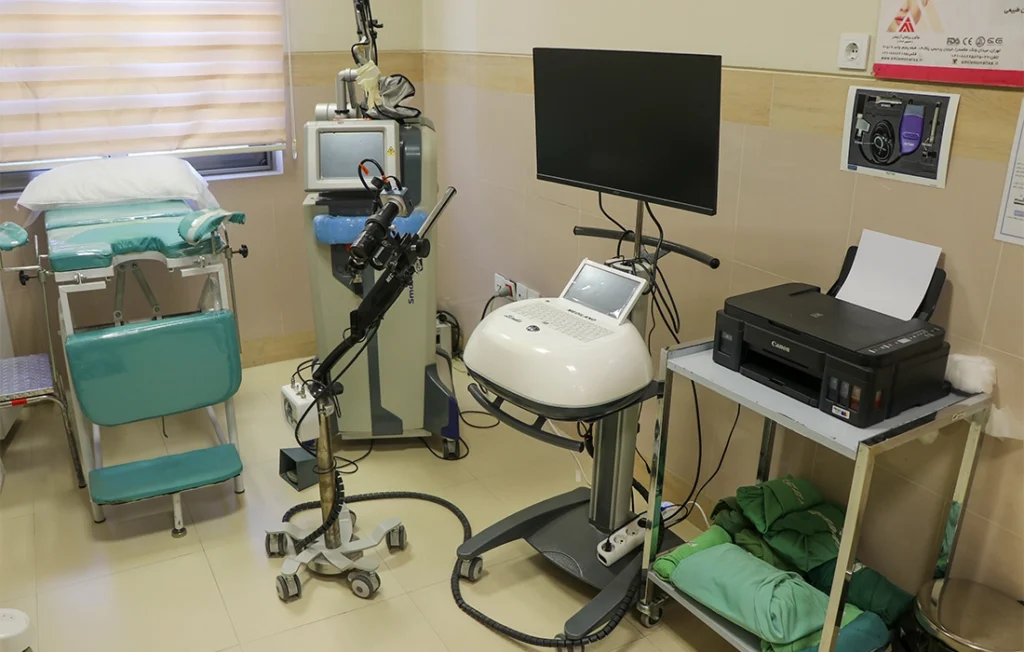
Cervical cancer is one of the common diseases affecting women. However, through regular examinations and evaluation of abnormal changes in cervical cells, it can often be detected and treated. This highlights the importance of regular visits to a gynecologist, undergoing screening tests, and using accurate diagnostic methods, particularly colposcopy.
How Many Colposcopy Systems Does Omid Hospital Have?
Omid Hospital’s first colposcopy system was purchased and put into service in 2018 (1397 in the Iranian calendar) with the support of Dr. Fatemeh Ali-Kouhi, a specialist in obstetrics and gynecology. The system is currently available to specialist physicians working in this field.
With the addition of a second colposcopy system, Omid Hospital has continued to expand and improve its diagnostic capacity since Dey 1404 in the Iranian calendar (December 2025–January 2026).
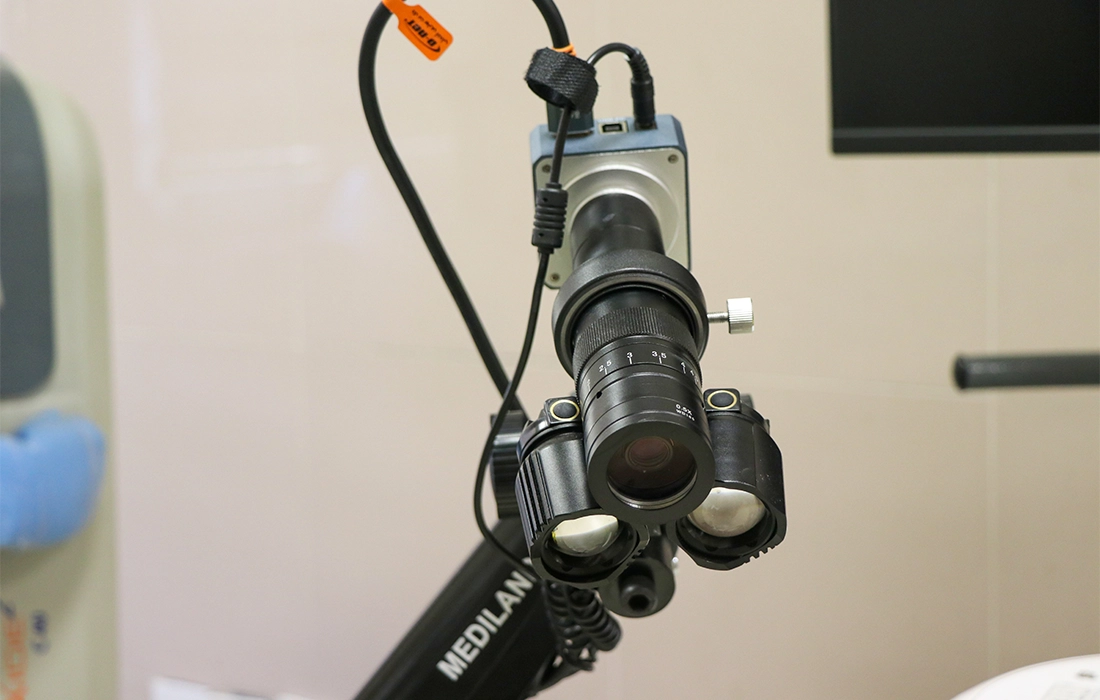
Colposcopy at Omid Hospital
The Colposcopy Department at Omid Hospital provides diagnostic services on designated days with the support of specialist physicians. Patients may contact the Specialized and Subspecialized Outpatient Clinic at Omid Hospital to schedule an appointment and receive further information.
Contact and Appointment Information
Hospital telephone number: 044-31881
Specialized Outpatient Clinic extensions: 160 and 161
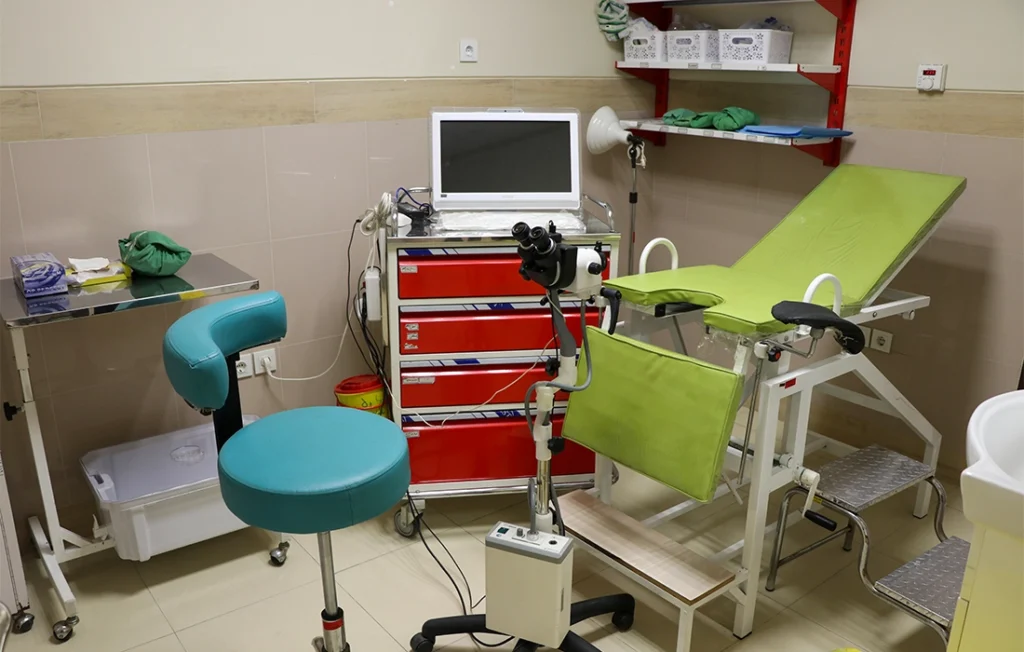


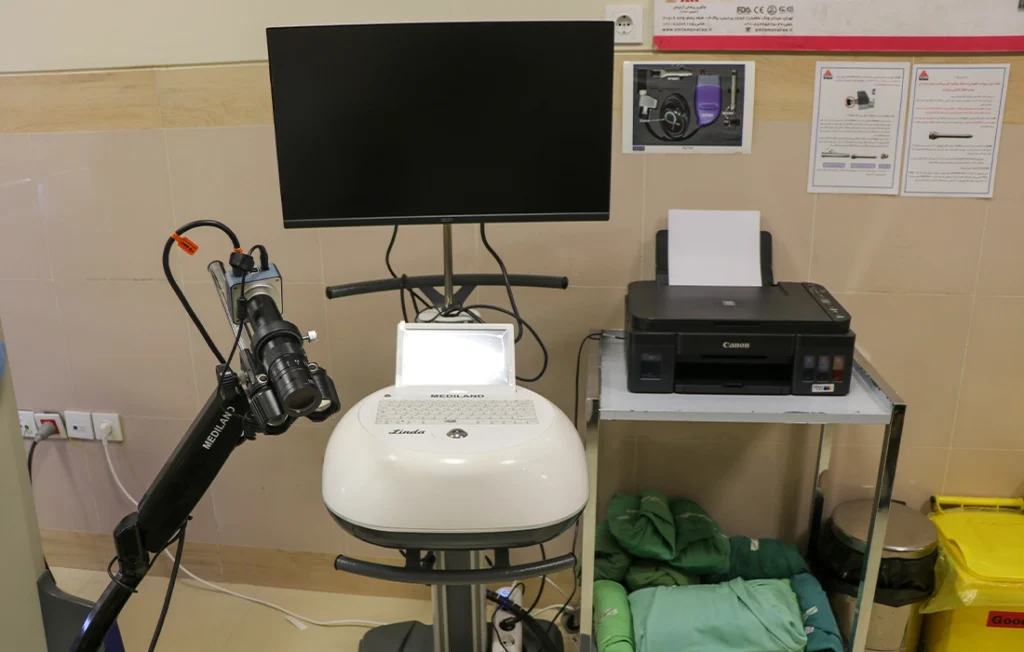
Learn More About Colposcopy as a Diagnostic Procedure
- Many precancerous cervical lesions can be detected and treated at an early stage, and early diagnosis plays an important role in preventing disease progression.
- Colposcopy is a specialized procedure that allows physicians to examine the cervix and surrounding tissues under magnification and, when necessary, perform a targeted biopsy.
- Undergoing a colposcopy does not mean that a patient has cancer. It is an accurate diagnostic method used to examine cervical tissue and assess its health when a physician determines that further evaluation is necessary.
- Awareness, timely consultation, and trust in one’s physician are three important factors in the prevention and treatment of many women’s health conditions.