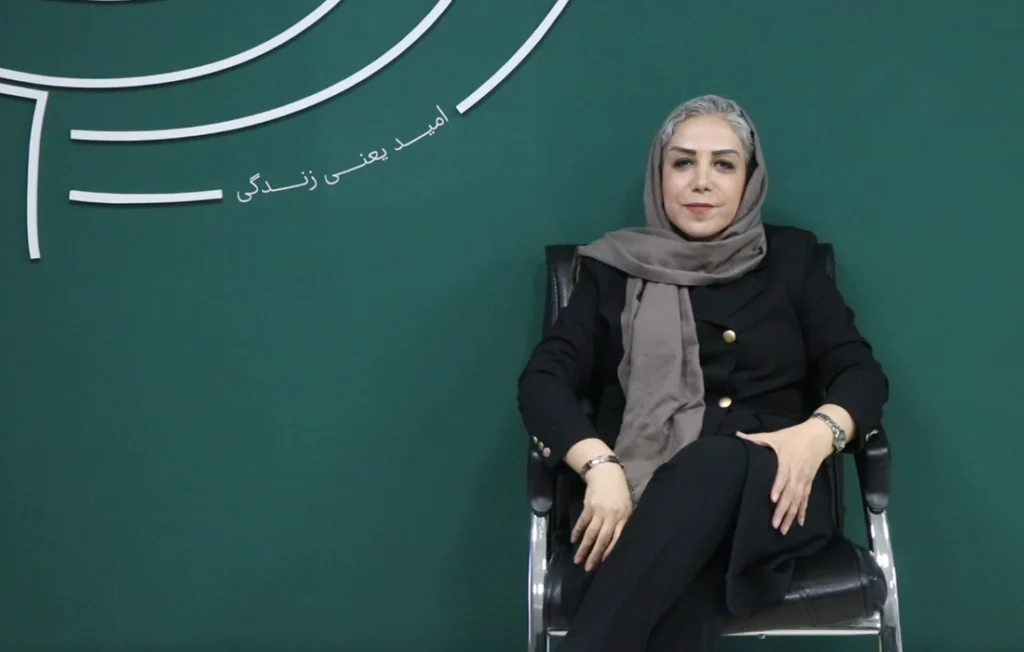
A conversation with Parihan Nafe, a nurse at Omid Hospital who experienced cancer as a new chapter in her own life.
For years, she had stood beside patients whose world seemed to stop when they heard the word cancer. She had held the trembling hands of families, listened to patients’ concerns and spoken about hope, reminding them that illness does not define a person’s whole identity. In Dey 1403, the word she had heard so often in hospital rooms was spoken about her.
This time, Parihan Nafe stood in the position of a patient rather than a nurse and caregiver. Medical knowledge alone was no longer enough. She also had to face her own fear, loneliness, hope and faith.
Familiar with breast self-examination, she had noticed a small lump, about the size of a pea. At first, she thought it might be a simple cyst, but her doctors’ findings were different. This is the story of a nurse confronting cancer herself.
Part one: I was shocked, just like any other patient
You had worked in healthcare for many years. How did you react when you learned that your illness was cancer?
When the ultrasound and mammogram showed a breast lump and involvement of two lymph nodes in my armpit, it was natural to feel shocked. At first, I asked myself: Why me? I had always looked after myself and attended screening. Why had this happened to me?
But that stage passed quite quickly. I had to decide whether to spend my days in sadness and fear or stand firm and begin treatment.
Part two: Early detection makes a significant difference
What did your experience teach you about the importance of screening?
Because of my education and my work as a nurse, I understood the importance of regular checks. I had been checked several times during 1403, and nothing had appeared in the earlier examinations. The lump developed later, and I noticed it in Dey, within just a few months.
One of the most important messages I want to share today is that women should not put off their regular checks. Sometimes, paying attention to your body can change the course of your life.
How did treatment begin after the diagnosis?
Very quickly, with a biopsy, tests and assessments to establish the stage of the disease and the most appropriate treatment. A colleague at Omid Hospital helped me a great deal and enabled me to begin treatment sooner. During those days, I realized how much a kind sentence, someone’s company or even a simple telephone call can mean to a patient.
Cancer should not be defined by fear.
What would you say today to someone who has just received a cancer diagnosis?
First, I would say: Do not be afraid of the name cancer. Cancer is an illness, and an illness has a course of treatment. We should not let fear defeat us before the disease itself.
One day, I stood in front of a mirror and looked at myself. For a moment, I felt a deep sense of energy. I remembered that I had overcome greater difficulties, and this was another stage in life in which I needed, as always, to remain patient and hopeful.
Part three: Becoming a patient changes a nurse’s perspective on care
What did being a patient teach you?
Perhaps the most important lesson was that patients need more than medicine and treatment. They need to be seen, heard and reassured that they are not alone. I had spoken with patients for years, but becoming a patient myself helped me understand their worries more deeply.
Part four: From chemotherapy to returning to life
Parihan Nafe’s first chemotherapy session took place on 18 Bahman 1403, and her treatment continued until the end of Tir. She then underwent surgery in Mordad, when the lump and affected lymph nodes were removed.
What was the most difficult part of treatment?
It was naturally a difficult period, but I tried not to put my life on hold. I continued exercising, paid attention to my nutrition and tried to keep my spirits up. I also encourage patients to learn about nutrition and the care they need before and after treatment.
Omid Hospital was more than my workplace. It was where I found hope again and rediscovered life.
How did you experience Omid Hospital this time as a patient?
I had been a colleague at the hospital, but when I became a patient, there was no difference between me and other patients. I received the same support that is offered to them.
When a patient has to worry about treatment costs as well as the illness itself, the pressure is considerable. Support from Omid Charity allows patients to move through treatment with greater peace of mind. I went through a difficult period, but I achieved good results. With God’s help and support from my family, friends and colleagues, I came through it with pride.
Hope is something we need to experience
Today, Parihan Nafe has returned to the place where she stood for so many years: beside patients. There is one significant difference. She is now more than a nurse who speaks about hope. She is a person who has lived through cancer herself.
Perhaps the most valuable part of this story is not the end of treatment but the beginning of a new perspective. Even when facing a serious illness, a person is more than a collection of tests and medical results. Above all, people need hope, meaning and a helping hand beside them during their most difficult days.
For her colleagues and patients at Omid, Parihan Nafe has become a symbol of overcoming cancer. Her energy, meaningful smile and voice convey a clear message: life continues, and hope continues.
Dates in this story follow the Iranian Solar Hijri calendar.